


Philip Chen is CEO of GMA in Shanghai. He has spent over a decade helping European brands decide when a foreign origin story sells a product in China, and when it just decorates the packaging.
Marketing a product as “British” used to be simple. You put a Union Jack on the box, mentioned London somewhere, and Chinese consumers filled in the rest: quality, heritage, a life they wanted a piece of. That worked well for a long stretch, and it is still part of why a handful of UK brands do very well here. But the ground has moved under this idea, and if you are launching a British brand in China in 2026 without knowing how, you are pricing your product on 2015 assumptions.
- Chinese consumers still associate “British” with quality and a certain restraint, distinct from the louder luxury codes of some other origins.
- But guochao, the wave of national pride in domestic brands, has eaten into the automatic premium that any foreign label used to command.
- Origin now has to be backed by a real reason to believe: a formula, a craft process, a regulation the domestic competitor cannot match. The flag alone does not close the sale anymore.
Does “Made in Britain” still mean anything to a Chinese buyer in 2026?
Yes, but less automatically, and in fewer categories than ten years ago. Chinese consumer sentiment has swung hard in the past eighteen months. Consulting data cited across Chinese business media shows net spending intent among Chinese consumers moving from roughly +10% in 2025 to around -8% for 2026, an eighteen-point reversal. Luxury and premium brands are being told to stop “telling value” and start “proving it”: heritage alone does not survive a hard look at the receipt anymore.
At the same time, guochao has moved into what people here call its third phase. It started during the pandemic as straightforward support for domestic brands over imports. It has since matured into pride in Chinese design, craftsmanship and cultural IP, a deeper and more permanent shift than a temporary buy-local mood. Local brands now out-perform foreign ones on preference in most categories tracked by Chinese market researchers over the past three years, and the reason given most often is not patriotism. It is price-to-quality fit. Chinese shoppers say plainly that they care less about where something was made and more about whether it is worth the money.
So the honest read for a UK brand: country-of-origin is not dead, but it stopped being a free pass. It still works as a tiebreaker, a trust signal, a shortcut to a story. It does not work anymore as the whole pitch.
Where the British halo still earns its keep
Scotch whisky
This is the clearest UK origin win of the year. From February 2026, China cut its provisional import tariff on whisky to 5%, a direct result of trade talks during the UK prime minister’s visit to Beijing. Scotch already holds close to 86% of all whisky imports into China by volume, so this tariff cut lands almost entirely on British exporters. The interesting part is what is growing inside that number: in the first half of 2025, blended Scotch exports to China rose about 46% in volume and 41% in value, while single malt fell by roughly 12% in volume and 33% in value. Chinese whisky drinkers are not retreating from Scotch. They are trading down inside it, toward bottles that make sense at a dinner table rather than a display cabinet. A brand pitching “Scottish heritage” without a credible price point under that story is missing where the actual growth is.
Skincare, baby products, heritage fashion
These three categories keep the UK halo alive for a different reason: regulation and safety perception, not romance. Chinese parents buying infant formula or baby skincare still lean toward foreign brands specifically because they trust the manufacturing standards more than they trust the story. Skincare works the same way when the claim is dermatological or clinical rather than purely aesthetic. Heritage fashion (think tailoring, tweed, classic outerwear) survives because it sells a codified, recognizable Britishness that is hard to fake and does not compete directly with the newer, design-forward domestic labels chasing a younger crowd.
Where it has weakened
General consumer goods, mid-tier fashion, and anything selling “British” as pure aesthetic rather than as a functional claim. Younger consumers in first and second-tier cities will still pay a premium for a genuinely better product, but they are far less willing to pay a premium just for the union flag on the box. That segment now expects a domestic alternative to exist, usually a good one, at two-thirds the price.
How British compares to the other origin halos
French still wins on pure luxury and beauty prestige, it is the deepest-rooted origin story in the category and the hardest to dislodge. Japanese origin carries an unmatched trust premium on precision and craftsmanship, especially in beauty devices, stationery and food. Korean origin dominates beauty innovation and K-culture-adjacent products, but that halo moves fast and needs constant content refresh to stay relevant. British sits in a narrower lane: understatement, safety, and a specific kind of old-money credibility that works well in whisky, baby care, and heritage goods, and works poorly when a brand tries to stretch it into categories where it has no functional backing.
Case study: a Yorkshire skincare brand that stopped selling “British” and started selling a formula
Early this year we worked with a small UK skincare brand, we will call the founder Rachel, whose sensitive-skin moisturizer had done modest but flat numbers on Tmall for two years. Her positioning leaned entirely on heritage: countryside imagery, a Union Jack motif, copy about “British quality since 1998.” Conversion from product page views sat under 1%, well below category average.
We rebuilt the Xiaohongshu and Tmall listings around the actual mechanism: a specific ceramide ratio developed for the NHS-adjacent dermatology market, tested on a defined sensitivity panel, with the UK’s cosmetic safety standard cited by name rather than implied by flag imagery. The British origin stayed in the story, but as evidence of a regulatory bar met, not as decoration. We paired that with a small wave of dermatologist-adjacent KOLs on Xiaohongshu who could speak to the ceramide claim specifically, not lifestyle content.
Conversion moved from under 1% to 2.6% over the following quarter, and average order value rose about 18% as customers started buying the two-product routine instead of the single jar. The mechanism behind that lift is simple: guochao-era Chinese buyers are not rejecting foreign products, they are rejecting foreign products that ask to be trusted on reputation alone. Give them a specific, checkable reason, and origin becomes a supporting fact instead of the whole argument.
Five UK brands and what actually still works about them
Dyson
Dyson remains one of the strongest British names in China, and the reason has not changed much: it sells engineering, not heritage. China stayed one of Dyson’s fastest-growing markets for years after its initial expansion, and the brand’s marketing consistently leads with technology (cyclone suction, digital motors, compact form factors built specifically for smaller Chinese apartments) rather than with Britishness as a value proposition. That is exactly the model this article is arguing for: origin as a footnote to a functional claim, not the headline.

Rolls-Royce Motor Cars
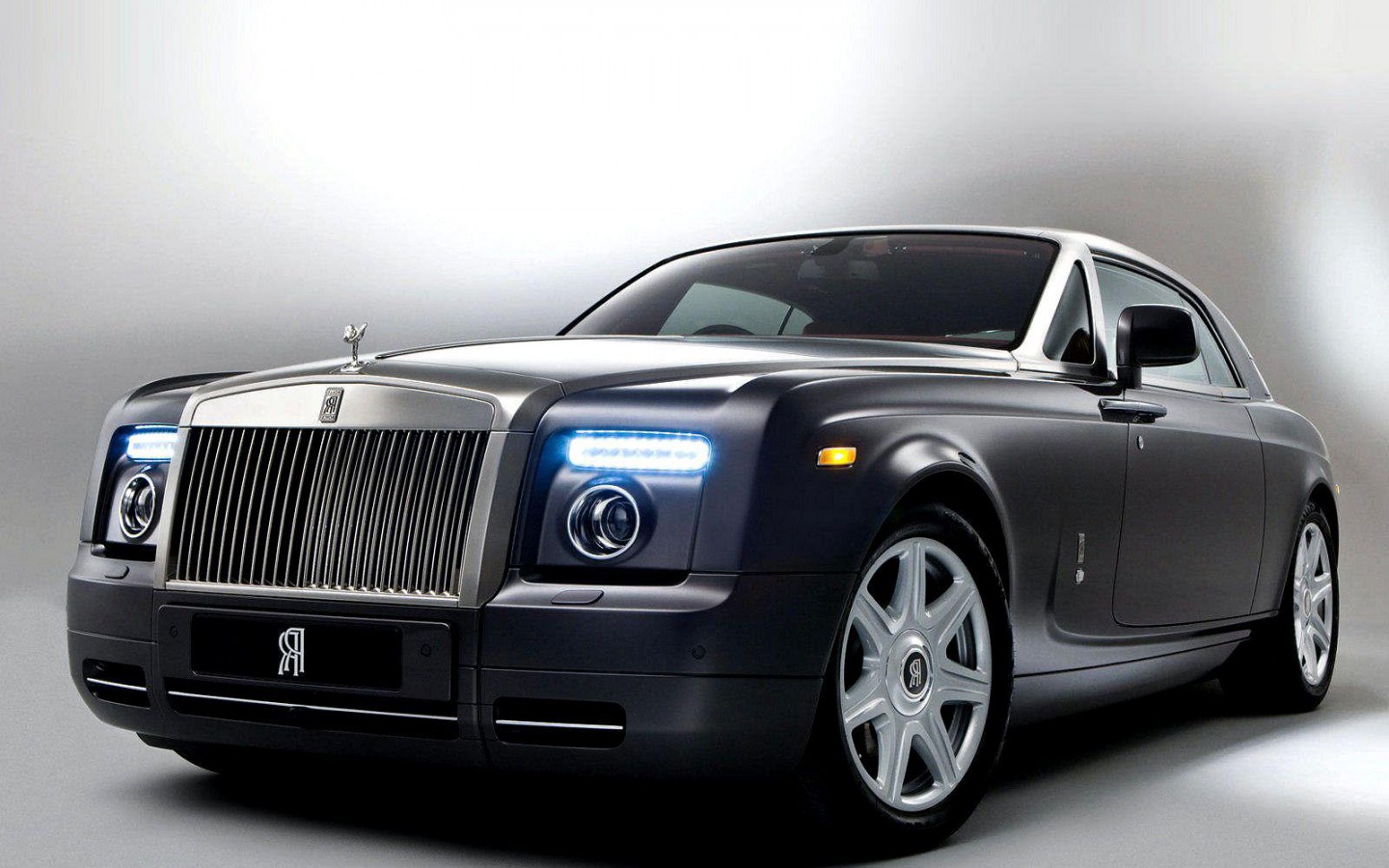
China has been Rolls-Royce’s largest or near-largest market for over a decade, weathering the government’s anti-extravagance campaigns better than most ultra-luxury brands because ownership of a Rolls-Royce reads as personal achievement rather than official excess. British heritage still does real work here, because in top-tier luxury automotive, heritage is the product. This is one of the few categories where the flag-and-story approach still converts on its own.
New Balance’s “Made in England” range
New Balance is American, but its Flimby, Cumbria factory line still gets marketed in China as a distinct, hand-made British product, and it still photographs well: black-and-white imagery with a single flash of the GB flag reads as authenticity in a market where counterfeit goods remain a real concern for shoppers. This example holds up in 2026 for the same reason it worked in 2015: it is a specific, verifiable manufacturing claim, not an abstract vibe.

The visual trick still holds up too. In the shot below, everything is black and white except the GB flag, which sits in color at the center of the frame. Chinese comments on this image, back when it first ran, all made the same point: wearing the brand is a way to signal a more international identity, and the “made in England” label reads as proof against a market where counterfeits are common.

Burberry
Burberry has had a rougher run since the original version of this article, its Chinese revenue has been under pressure along with the rest of the personal luxury sector, and the brand has cycled through several creative and strategic resets. But it is still a useful lesson in what British heritage marketing needs to survive guochao: constant reinvention on top of the codes, not a static reliance on them. Burberry’s flagship experiences and its repeated attempts at localized storytelling (rather than simply exporting a London campaign unchanged) are the template, even when the sales numbers have been uneven.
Johnnie Walker
Johnnie Walker replaces Rolls-Royce’s category-mate slot well here because it shows the localization playbook in action: a limited-edition Blue Label released for Chinese New Year, with a Hong Kong-born designer given creative control of the packaging for the 2026 edition. That is a British spirits brand treating Chinese cultural moments as a design brief, not a translation exercise, which is precisely the adaptation that keeps the Scotch tariff cut from being wasted on brands that never bothered to localize.

What a UK brand should actually do with this in 2026
Stop leading with the flag and start leading with the specific thing the flag is supposed to prove. Is it a food safety standard? A design credential? A manufacturing process a domestic competitor genuinely cannot replicate at the same price? Say that. Chinese consumers, particularly the guochao-fluent Gen Z segment, are not anti-foreign, they are anti-vague. And should a UK brand skip China altogether because guochao sounds intimidating? I would not, the categories where British origin still converts (spirits, baby care, dermatological skincare, top-tier heritage goods) are large enough on their own to build a real business, as long as the positioning does its homework 🙂
Localization also has to go deeper than packaging. That means building real search presence on Xiaohongshu, where Chinese shoppers now research a product before they trust a brand story, and it means understanding how luxury and premium positioning gets adapted for Chinese consumers rather than imported wholesale. For sectors like infant nutrition, where foreign brands still hold a real trust advantage, the job is to protect that advantage with documentation, not just imagery.
According to the China-Britain Business Council, UK exporters who have stayed in the Chinese market through the guochao years describe the same lesson: appetite for British and European products remains real, particularly for quality and niche appeal, but it now needs a functional argument attached, not a Union Jack alone.
FAQ: country-of-origin branding for UK products in China
Is “Made in Britain” still worth putting on packaging in China?
Yes, if it is backed by a specific, checkable claim (a safety standard, a manufacturing process, a formula). On its own, as decoration, it has lost most of the automatic pulling power it had a decade ago. Treat it as supporting evidence, not the headline of your positioning.
Does guochao mean foreign brands are losing in China?
Not exactly. Local brands have gained preference share across most categories, largely on price-to-quality grounds, not pure patriotism. Foreign brands with a real functional edge, especially in whisky, baby care, and clinical skincare, are still growing. The brands losing ground are the ones whose entire pitch was “imported.”
Which UK sectors have the strongest China opportunity right now?
Scotch whisky, following the February 2026 tariff cut to 5%, is the clearest near-term opportunity, particularly for blended rather than single malt, where the volume growth actually sits. Baby and infant products, dermatological skincare, and heritage fashion with a codified aesthetic (tailoring, tweed, classic outerwear) also hold up well.
Should a UK brand localize its packaging or keep it distinctly British?
Both, but not in equal measure. Keep the visual codes that read as credibly British (understatement, craft cues, a real heritage detail), and localize everything else: the claim structure, the KOL strategy, the platform mix, and any seasonal or cultural tie-ins. A campaign that is 100% imported unchanged from the UK market usually underperforms one that keeps 30 to 40% of its original identity and adapts the rest.
How long before a British brand sees results after repositioning around a functional claim instead of heritage alone?
In our experience, a full quarter is the minimum to see a real shift in conversion, since it takes that long for updated Xiaohongshu content and KOL coverage to build search visibility around the new claim. Meaningful revenue impact usually shows in the second quarter after relaunch, once repeat buyers and reviews start reinforcing the new positioning.
If you run a British brand and are not sure whether your origin story is still doing any selling for you, this is worth an outside look. Our branding team in Shanghai builds positioning that pairs UK heritage with a real, checkable reason to buy, not just a flag on the box. We test that pairing across Tmall, Xiaohongshu and Douyin before scaling spend behind it, and we adjust the claim, not just the creative, when a category’s guochao pressure is high. If a British brand is considering China, or has been here for years on a flat trajectory, that is the conversation worth having with us first.


